
One-to-one computing has fundamentally changed daily instruction in many K-12 schools. Digital devices support writing, research, assessment, personalized learning, communication, collaboration, and access to academic resources. At the same time, increased access to technology has raised a legitimate question for educators and families: How much time do students actually spend on school-issued devices, and what does this use involve?

Sharing is Caring: How Massachusetts Districts Are Navigating YouTube Changes
Earlier in 2025, mid-year, Google adjusted its Additional Services, including a new parental-permission requirement for YouTube. In years past, students and staff had unfettered access to YouTube with Safe Search enabled, which still allowed significant non-academic video viewing. Google wouldn’t sign a student data privacy agreement for these additional services and pushed the responsibility back to school districts to obtain parental consent.
Google’s spring changes raised immediate questions for school districts, including my own: How should we manage student access to non-core services (like YouTube)? What role should teacher-embedded videos play, or should we block them completely? And how do we balance instructional needs with compliance and student safety? Read more…
Why Simply Asking Parents for Consent Is Not a Fix for Student Data Privacy
As school districts adjust to Google’s updated terms for Additional Services, which significantly affect YouTube, Maps, Translate, and Earth, some educators may wonder aloud, ‘Why not just obtain parental permission and continue using it?’ I could curse Google, but I see an opportunity in what they have presented to school districts nationwide. On the surface, gathering consent for Google’s Addtional Services (i.e., YouTube) to market to and collect data on students under 18 can seem like a reasonable workaround. Still, in practice, it is anything but ethical or straightforward. School leaders should focus on meeting strict privacy standards rather than requiring parents to forgo safeguards through a parental consent form. Read more…

Beyond the Device: Overlooked Pitfalls of 1:1 Programs…and What Schools Must Do First
As schools across the country race to equip students with Chromebooks, iPads, and laptops, a critical question often gets overlooked: Are we truly ready?
More importantly, do we have the vision, support, and systems to ensure these devices foster deeper learning rather than become another screen in an already (deeply) saturated digital world?
Like many educators, I’ve seen firsthand how adding more screens to students’ lives, especially without the right guardrails, has unintended consequences. Research is catching up with what teachers have felt for years. Read more…
Sample Post: A Smooth Transition: Helping Your Child Adjust to Middle School Life
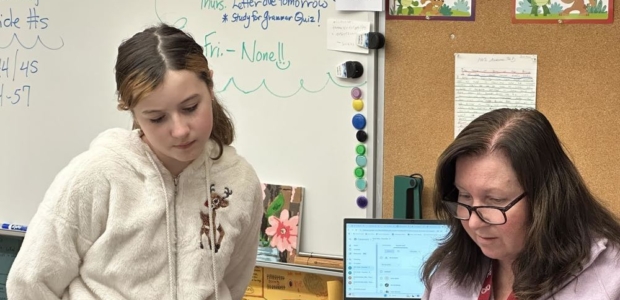
Transitions to new offices, positions, and working with new colleagues (and much more!) are complex for everyone. Transitions can also be difficult for students moving from one of our two elementary schools to our regional middle school. With this in mind, I wanted to highlight our fifth-grade teacher team, a dynamic group of teachers who work tirelessly to support our students. I asked some of our teachers to share essential tips to help parents support their children as they transition to middle school. Read more…