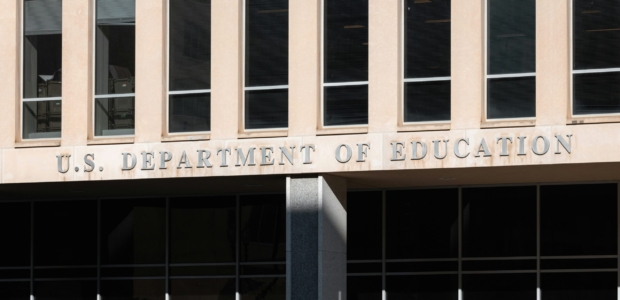
The recent and substantial workforce reductions at the U.S. Department of Education (DOE) are not simply internal matters. The cuts represent a critical weakening of the systems that public school districts rely on to protect students’ rights, particularly in data privacy. With significant reductions affecting the Family Policy Compliance Office (FPCO), the federal oversight body responsible for enforcing our favorite acronym, FERPA, or the Family Educational Rights and Privacy Act. The landscape of student data protection is changing…and not for the better.
During the Gerald Ford administration (you are reading this correctly), FERPA was adopted, with provisions that guarantee that students and their families control access to and the sharing of their educational records. For decades, the FPCO has served as the enforcement arm of that guarantee, with some cases lasting years before being officially resolved. However, with a sharp decrease in staffing, the DOE will now face significant challenges in responding to complaints and pursuing data privacy investigations in a timely and effective manner, if at all.
FERPA enforcement has long depended on a complaint-based model, as there was never a way to take accurate sips from the fire hose of infringements to pursue. Investigations into data breaches require deep analysis, communication with multiple stakeholders, and extended timelines. The erosion of capacity to manage these cases raises serious concerns, especially at a time when schools increasingly rely on digital platforms (think Google Workspace for Education), data analytics tools (think Tableau or AnalyticVue), and third-party applications that collect, store, and process student information (think every single educational software or application on the market).
When school districts prioritize legal strategy and insurer guidance over timely disclosure (as recently occurred at a local school district), families are left vulnerable, learning too late that their children’s data has been stolen. In the absence of vigorous federal enforcement protecting student data privacy, the responsibility must shift to the states to support their local districts. As the Director of Technology & Digital Learning, I urge all leaders to rise to this challenge with proactive transparency, not just reactive compliance, to truly safeguard student privacy.
Protecting student data privacy requires investing in state-level guidance and oversight, supporting local district leaders in their data governance efforts, and promoting the adoption of policies that align with both FERPA and broader best practices in student data protection. It also involves ensuring transparency, accountability, and alignment with national standards, even in the absence of consistent federal enforcement.
Crucially, the current period represents a pivotal opportunity for public advocacy. I urge educators, parents, technology leaders, and concerned citizens throughout Massachusetts to engage with their state representatives in Boston. Ask them to prioritize student data privacy. Request funding for local training and technical support for overworked public school districts, and demand that leaders take a role in filling the void left by diminished federal oversight.
Trust between schools and families is built on the belief that student records and data will be treated with care and discretion, in accordance with legal requirements. I have discussed in the past some ideas and implementation strategies for how district leadership, from a technology department’s perspective, can fight back. That trust is now at risk. If we don’t reinforce these protections, we risk creating uneven standards, misinterpretation at the local level, increased vulnerability, and a loss of confidence in our educational institutions.
Student data privacy must not be viewed as discretionary; instead, it is a fundamental right tied to the dignity of every learner. Massachusetts and its school districts have both the opportunity and the obligation to lead on this front. Let us act not after harm is done, but now, with urgency, clarity, and purpose.
Photo by Andy Feliciotti on Unsplash